

The science behind Neupulse
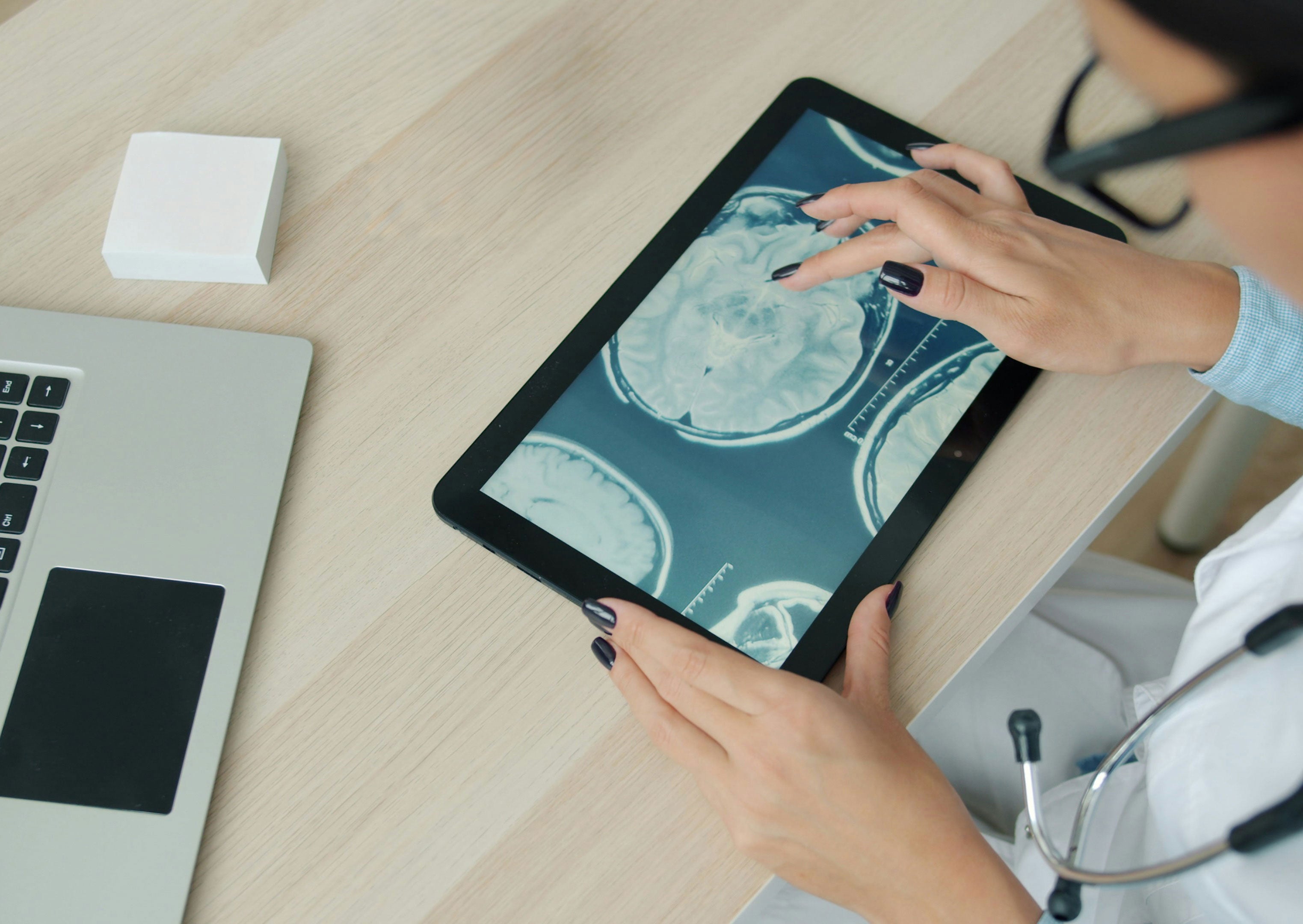
Our research began in 2005, exploring Tourette syndrome and the brain networks involved in movement and cognitive control. Early studies used brain imaging and stimulation techniques to better understand how changes in brain function may relate to the natural variation of tics over time.
In 2009, collaboration with the UK charity Tourettes Action, the NIHR and Nottingham Biomedical Research Centre, highlighted the need for approaches that could be used more easily outside of clinical settings, helping shape the direction of our research.
Building on this work, we investigated non-invasive methods of interacting with brain activity, including approaches indicated to influence neural rhythms associated with motor control. While techniques such as transcranial magnetic stimulation were explored, their practicality for everyday use was limited.
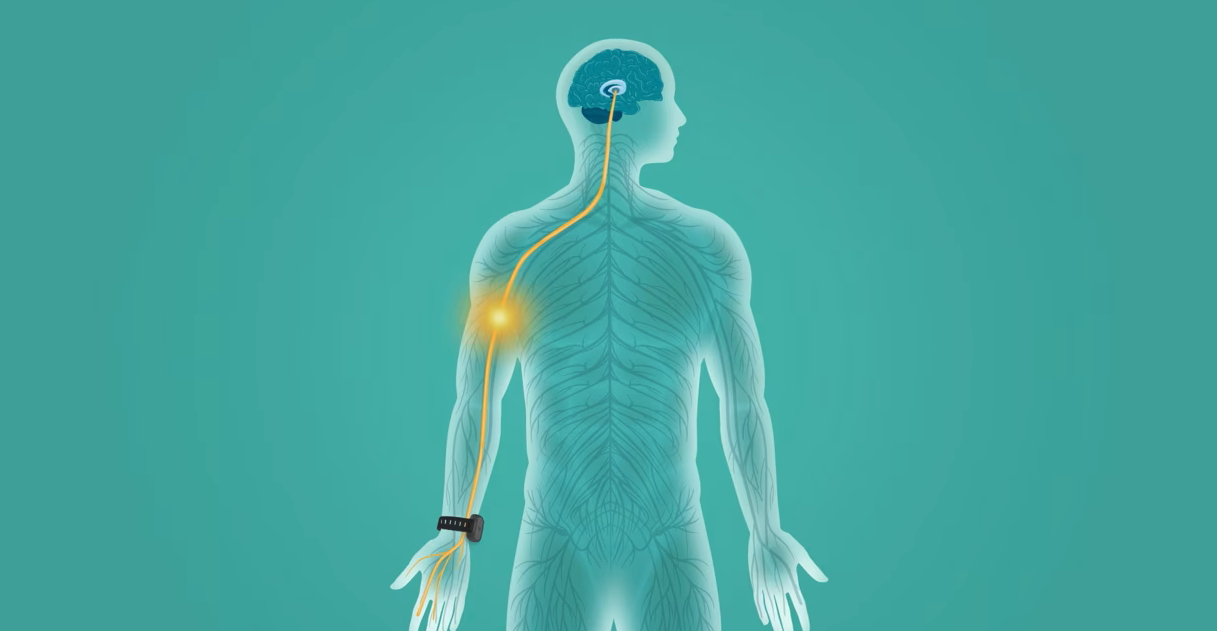
This led to further research into rhythmic median nerve stimulation as a more accessible alternative. Supported by the University of Nottingham, Tourettes Action, and the NIHR Nottingham Biomedical Research Centre, this work contributed to the development of the broader Neupulse platform.
Clinical studies, including a UK-based double-blind trial, have explored this approach in people with tic disorders, with findings indicating changes in tic-related measures under certain conditions. This research continues to inform our ongoing clinical development.
This body of research underpins our broader technology platform. Our medical device, Neupulse M, is currently under development and progressing through regulatory approval. While our wellness device, Neupulse C, translates this approach into a product designed for general wellbeing.
Findings from Clinical Studies
Motor Tics
77% of participants receiving active stimulation showed a reduction of at least 25% in motor tic severity compared to their baseline over a 4-week period.
Phonic Tics
54% of participants receiving active stimulation showed a reduction of at least 25% in phonic tic severity compared to baseline over the same period
Short Term Effects
Some findings from the study indicated changes in tic-related measures during periods of active stimulation
Study Duration
Over the 4-week study period, participants receiving active stimulation showed changes in tic severity measures compared to baseline
These findings relate to clinical research conducted in individuals with tic disorders and are part of our ongoing clinical development. Our wellness device is intended for general wellbeing and is not designed to diagnose, treat, or cure any medical condition.
From research to the real world
This video highlights research exploring the use of median nerve stimulation in individuals with tic disorders. It reflects clinical studies that have informed the development of our broader technology platform.
This video relates to clinical research and does not represent the intended use of the Neupulse C device, which is designed for general wellbeing and not for the diagnosis, treatment, or cure of any medical condition.
Selected publications
These publications reflect the scientific research that informs our broader technology platform.
Barbara Morera Maiquez, Caitlin Smith, Katherine Dyke, Chia-Ping Chou, Belinda Kasbia, Ciara McCready, Hannah Wright, Jessica K. Jackson, Isabel Farr, Erika Badinger, Georgina M. Jackson, Stephen R. Jackson
A double-blind, sham-controlled, trial of home-administered rhythmic 10-Hz median nerve stimulation for the reduction of tics, and suppression of the urge-to-tic, in individuals with Tourette syndrome and chronic tic disorder
https://bpspsychub.onlinelibrary.wiley.com/doi/10.1111/jnp.12313
Barbara Morera Maiquez, Georgina M. Jackson, Stephen R. Jackson (2021)
Examining the neural antecedents of tics in Tourette syndrome using electroencephalography.
Journal of Neuropsychology
https://doi.org/10.1111/jnp.12245
Stephen R. Jackson, Hilmar P. Sigurdsson, Katherine Dyke, Maria Condon, Georgina M. Jackson (2021).
The role of the cingulate cortex in the generation of motor tics and the experience of the premonitory urge-to-tic in Tourette syndrome.
Journal of Neuropsychology, 15(3), 340-362.
Katherine Dyke, Georgina M. Jackson, Stephen R. Jackson (2021).
Non-invasive brain stimulation as therapy: systematic review and recommendations with a focus on the treatment of Tourette syndrome.
Experimental Brain Research. 10.1007/s00221-021-06229-y.
Mairi S. Houlgreave, Barbara Morera Maiquez, Matthew J. Brookes, Stephen R. Jackson (2022).
The Oscillatory Effects of Rhythmic Median Nerve Stimulation. Neuroimage.
Hodkinson Duncan J, Jackson Stephen, Jung JeYoung (2022)
Task-Dependent Plasticity in Distributed Neural Circuits after Transcranial Direct Current Stimulation of the Human Motor Cortex.
Neuroscience http://dx.doi.org/10.2139/ssrn.3988621
Caitlin M. Smith, Hilmar P. Sigurdsson, Katherine Dyke, Rosa Sanchez Panchuelo, Susan T. Francis, Georgina M. Jackson, Stephen R. Jackson (2022).
Somatomotor cortical mapping in Tourette syndrome using neuro-navigated transcranial magnetic stimulation.
International Review of Movement Disorders, 2666-7878.
Mairi Houlgreave, Bàrbara Morera Maiquez, Katherine Dyke, Georgina Jackson, Stephen Jackson (2022)
Entrainment of movement-related brain oscillations to improve symptoms in Tourette syndrome.
International Review of Movement Disorders, 2666-7878.
read article
Meet the scientists

Prof. Stephen Jackson
Founder & Chief Scientific Officer

Prof. Georgina Jackson
Founder & Senior Science Officer
Dr Barbara Morera
Founder & Chief Research Officer